My Home & Solar Solutions Clean Energy Report
Clean Energy News
Transparent Reporting for a Sustainable Future
Latest News
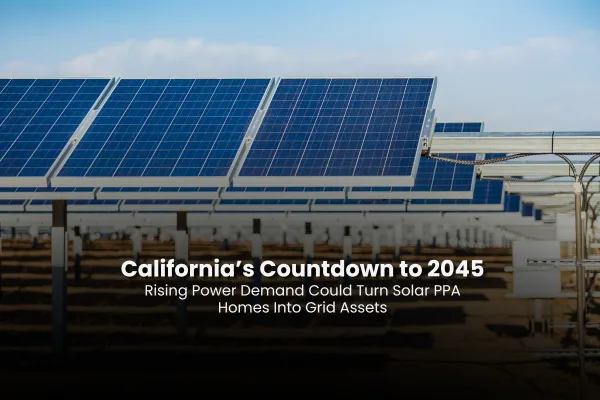
California’s Countdown to 2045: Rising Power Demand Could Turn Solar PPA Homes Into Grid Assets
California’s Countdown to 2045: Rising Power Demand Could Turn Solar PPA Homes Into Grid Assets
California’s clean-energy future is no longer just about big solar farms, utility projects, and power plants. It is also about rooftops, batteries, and everyday homeowners who may already have the tools needed to support the grid.
Edison International’s“Countdown to 2045”report says California must take bold action to reach its updated decarbonization goals by 2045 while meeting electricity demand projected to rise by 80%. That one number changes the conversation for homeowners with solar PPAs, battery storage, and Virtual Power Plant participation.
For decades, homeowners were treated as utility customers. They bought electricity from SCE, SDG&E, or PG&E, paid the bill, and waited for the next rate increase. But as California moves toward a cleaner and more electrified economy, homes with solar and batteries may become much more than customers. They may become grid assets.
Why California’s 2045 Energy Goal Matters
California’s plan to reach carbon neutrality depends on using more electricity instead of fossil fuels. That means more electric vehicles, more electric appliances, more heat pumps, more battery storage, and more clean power flowing through the grid.
Edison says California’s electricity demand could rise by 80% by 2045 as the state electrifies transportation, buildings, and other parts of the economy . That growing demand creates a massive challenge for utilities, but it also creates an opportunity for homeowners who already have solar power on their roofs.
If the grid needs more clean electricity, then local solar production becomes more valuable. If the grid needs more flexibility during peak hours, then home batteries become more valuable. And if thousands of homes can be connected together through Virtual Power Plant programs, those homes can help support the grid like a distributed power plant.
How Solar PPA Homes Fit Into the Bigger Picture
A solar PPA, or Power Purchase Agreement, allows eligible homeowners to use solar energy generated at their home without having to buy, lease, or finance the solar equipment upfront. Instead of owning the system, the homeowner pays for the power the system produces.
For homeowners, the benefit is simple: if the PPA rate is lower than the utility’s retail electricity rate, the home can reduce monthly electric costs. If the system includes battery storage, the homeowner may also reduce exposure to expensive peak-hour electricity.
For the grid, the benefit is even bigger. Solar PPA homes can generate clean power close to where it is used. When paired with batteries, those homes can store extra solar energy during the day and release it later when demand is high.
That matters because Edison’s 2045 roadmap depends on a larger, cleaner, more flexible electric system. The more homes that can produce and store energy locally, the less pressure there may be on traditional grid infrastructure alone.
From Ratepayer to Grid Asset
The old utility model was one-directional. Power plants generated electricity, utilities delivered it, and homeowners paid for it.
The new model is more flexible. A homeowner with solar and battery storage can consume power, store power, and potentially share power back to the grid through a Virtual Power Plant program.
That is why the phrase“grid asset”matters. A solar PPA home is not just reducing its own bill. It may also help California meet rising electricity demand, reduce peak strain, and support the transition to cleaner energy.
As California moves toward 2045, utilities will need more clean power and more flexible energy resources. Homeowners with solar and batteries may already be positioned to help meet that need.
What This Means for Homeowners
For homeowners worried about rising electric bills, SCE rate increases, SDG&E costs, PG&E costs, wildfire-related charges, and future grid upgrade expenses, solar PPAs and battery storage may offer a practical path forward.
Instead of waiting for utility rates to become more affordable, homeowners can look for ways to control energy costs now. A solar PPA may help reduce the cost of electricity used at the home. A battery may help manage peak-time usage. A Virtual Power Plant program may create additional value by allowing stored energy to support the grid when it is needed most.
The key is understanding the terms. Homeowners should compare the PPA rate, annual escalator, battery option, utility rate structure, and any available Virtual Power Plant benefits before making a decision.
The Bottom Line
California’s Countdown to 2045 is really a countdown to a new energy model. Electricity demand is expected to rise sharply, clean power will need to expand quickly, and the grid will need help from more flexible resources.
That is where solar PPA homes come in.
Homeowners with solar and batteries may no longer be just customers of SCE, SDG&E, or PG&E. They may become part of the energy solution. As California’s power demand rises, the homes that can generate, store, and share clean electricity may become some of the most valuable assets on the grid.
Source
Edison International, “Countdown to 2045”
https://www.edison.com/clean-energy/countdown-to-2045
MEET THE Team
My Home & Solar Solution is a virtual home‑energy brokerage committed to serving homeowners at the highest level as they navigate every stage of homeownership. Our mission is to build true financial literacy around the home—helping families understand their utility bills, evaluate financing options, and make smart long‑term decisions about their property. We design and broker rooftop solar, battery storage, roofing, and other energy‑efficient upgrades so homes become more resilient, more modern, and less expensive to operate. At the same time, we translate complex climate policy and utility politics into clear, practical insights, so homeowners can see how decisions made in Washington, Sacramento, and their local utility boardroom actually affect life—and costs—at home.
What We Cover...

Technological Innovations
Solar technology is advancing at an unprecedented pace. Our news page features updates on groundbreaking developments, including:
High-efficiency panels: Learn about the latest solar panels, including advancements in materials like perovskite and bifacial designs.
Energy storage: Discover innovations in battery technologies that enhance the reliability and scalability of solar systems.
Smart grids: Stay informed about how solar integrates with smart grid systems to optimize energy distribution.

Market Trends and Analysis
Understanding market dynamics is crucial for anyone involved in solar energy. Our articles delve into:
Solar adoption rates: Explore data on how solar installations are growing across residential, commercial, and industrial sectors.
Pricing trends: Get insights into the costs of solar panels, inverters, batteries, and installation services.
Investment opportunities: Stay ahead with information about renewable energy stocks, tax credits, and financial incentives.

Policy and Legislation
Solar energy thrives on supportive policies. Our coverage includes:
Federal and state incentives: Learn about tax credits, rebates, and grants available to solar adopters.
Regulations: Understand net metering policies, permitting processes, and compliance requirements.
Global policies: Discover how international agreements and policies impact the U.S. solar industry.

Environmental Impact
Renewable energy and smart home upgrades are essential in reducing carbon footprints and promoting sustainability. Our content highlights:
Carbon savings: Understand the environmental benefits of switching to renewable energy and energy-efficient technologies.
Sustainability practices: Explore how smart homes, energy storage, and eco-friendly upgrades contribute to broader sustainability goals.
Real World Impact: Discover case studies of successful projects that showcase how renewable energy and smart innovations benefit communities and ecosystems..

Solar Success Stories
Real-world applications of solar energy inspire and inform. We feature:
Residential installations: See how homeowners are transforming their energy usage with solar panels.
Business case studies: Learn about companies leading the charge in renewable energy adoption.
Community projects: Discover how solar energy is empowering underserved regions and creating jobs.

Challenges and Solutions
While solar energy offers numerous benefits, challenges remain. We address issues like:
Grid reliability: Explore how solar interacts with aging grid infrastructure.
Material sourcing: Understand the sustainability concerns related to raw materials for solar panels and batteries.
End-of-life management: Learn about recycling and disposal solutions for solar equipment.
Our Vision For The Future
At My Home & Solar Solutions, our vision extends beyond providing news.
We aim to:
Advocate for policy changes: Support initiatives that make renewable energy and home improvement upgrades more accessible and affordable.
Drive innovation: Partner with industry leaders to bring the latest technologies to market.
Promote sustainability: Champion practices that prioritize environmental health and resource conservation.
By aligning with these goals, we strive to create a platform that not only informs but also inspires action.
Why Choose My Home & Solar Solution for Your Home Improvement News?
We take pride in delivering:
Expertise: With over a decade of experience in the solar industry, we bring unparalleled knowledge to our reporting.
Accuracy: Our content is meticulously researched and verified to ensure reliability.
Relevance: We focus on topics that matter most to our audience, from homeowners to industry professionals.
Our commitment to quality has earned us a reputation as the authoritative source for solar news in the U.S. By choosing My Home & Solar Solution, you are choosing a partner dedicated to your energy independence and environmental stewardship
Facebook
Instagram
Youtube